A Month in the Country
1.
In addition to attending my local Quaker Meeting, I continue to occasionally visit the Anglo-Catholic church I was so drawn to at Lent.
I enjoy being anonymous in the very back row, knowing no one (virtually), having no responsibilities. I find it works better when I treat the clergy as just another part of the sacramental pageantry - no more sacred or holy or central to the Mass than the water finger dippers beside the entrance doors, or the side chapel to Mary where people light candles after communion.
I enjoy an hour of bathing in the ‘Light Without’, soaking in beauty and material presence. I enjoy it when the vicar flicks water on my shirt and when the holy smoke begins to rise.
This isn’t, although it may sound strange, incommensurate with Quaker values:
To Fox and the early Friends, the whole of life seemed sacramental… (1)
Although I still feel Catholic ‘in my blood’, in my recent, personal experience of Catholic worship, the Eucharist doesn’t feel any more sacred - imbued with the presence of Christ - than any other object or person in the liturgy. Certainly, nothing needs to be ‘transformed’, or prayed over specially, for it to become the body and blood of the Lord.
The Spirit is poured out on all ‘flesh’ - and especially, in terms of the spirit of Jesus, poured onto and into the lowest. In continuity with the historical Jesus, we are more likely to meet Christ in the bathroom or the kitchen or the children’s room than in the sanctuary or vestry of a church building.
Quite quickly, the contradictions of Anglo-Catholic liturgy as Christian worship begin to become more noticeable.
The spirit of the group - the human spirit - is rather stuffy and stiff. The Mass trains us to be passive in as much as it trains us to be contemplative, but there’s no sense in which contemplative life - waiting on the spirit - might erupt into (contextually-appropriate) dynamic life (despite the emphasis on the outward/sacramental). The priests hardly smile. The altar servers stand waxen still, their hands eternally clasped in prayer. The children run around and make noises - thank God, there is life!
Two people are baptized in an old marble font. It is beautiful and very moving. One of the priests, holding a candle, remains emotionless the entire time. The baby is blessed with water and wriggles her feet. A young woman is tearful as the sign of the cross is traced on her forehead with oil. The priest assistant, holding the candle, remains frozen in place.
At the end of the baptisms, I want to clap and cheer. I stop myself. I feel anxious - no one else is doing this. I am anxious of “getting it wrong”. Perhaps everyone else feels this too, so we don’t do anything. We repress and internalize whatever it is we feel, however the Spirit is actually moving us. The priestly entourage returns to the sanctuary. On the vicar’s command, we clap.
Now the Lord is the Spirit, and where the Spirit of the Lord is, there is freedom. (2 Corinthians 3.17).
Can I leave now? Have I got what I came for? I keep going back to the dream I had after visiting this church for the first time in Lent:
…there is a spirit inside me, moving forward, and a spirit beyond me, approaching.
It is Pentecost. The vicar preaches on the Holy Spirit - who else! It’s a great sermon and speaks to my dream.
There is no corner of experience that is beyond the Spirit’s reach.
“When the Spirit of God descends upon a person and overshadows them with the fullness of his [sic] outpouring, then their soul overflows with a joy not to be described, for the Holy Spirit turns to joy whatever he [sic] touches.” (St Seraphim of Sarov).
“Acquire inward peace, and thousands around you will find their salvation.” (St Seraphim of Sarov).
The whole purpose of the Christian life, as Seraphim said, is the acquisition of the Holy Spirit — and everything else, our worship, our sacraments, our service, our prayer, is simply a means to that one glorious, transforming end.
Ah, perhaps this is what I came for! It confirms to me that what I have begun to experience on my Quaker journey is indeed the whole purpose of the Christian life.
2.
That night I have a dream. I am sitting in the Anglo-Catholic church, in the back rows as usual, wearing a bright apple-green jersey. I am barefoot, with feet resting in wet, lovely mud. I am going to be ‘dismissed’ by the vicar: a short ceremony discharging me of my duties, or, rather, declining the service I have been offering to the church. I stand up and go to leave. On the way out, I pick up some lush tufts of green grass that are growing in a gap between pews beside me, and take them with me as I leave.
3.
I write to a friend: it is time for me to become more active in the parish of Nature.
I take the dog for a walk and write a poem:
We’re headed for the driest May on record.
Huge piles of desiccated oak and walnut leaves.
But the ditches are still marshy along the foreshore track.
Panic and aliveness. I speak to “Rob”, “almost a local”,
who thinks that the weather is “crazy”.
Kingfishers sprawling in the yellow-breasted sun.
4.
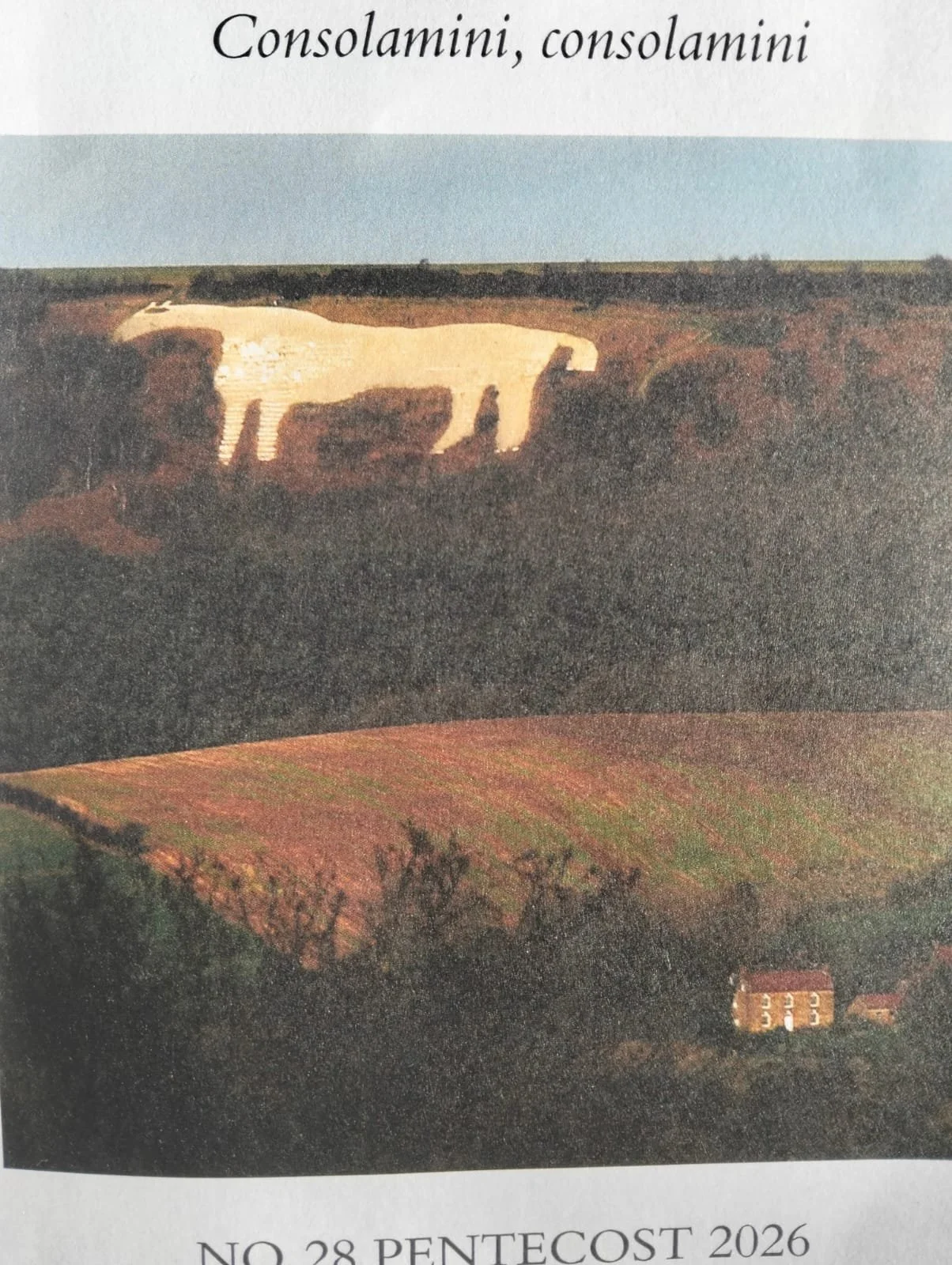
Stanbrook Benedictines arrives in the post. This is a small, quarterly publication of news from Stanbrook Abbey, Yorkshire (where my cousin is a member of the community).
It is always a comforting read, especially “Extracts from the House Chronicle”:
27th-29th The precious Pre-Advent Silence Days. Weather mixed.
11th A ‘rosy-fingered dawn’ of great beauty and intensity.
1st February is beginning in the same gloomy vein: mist, cold and rain.
Sister Petra’s choice, for favourite book of the year, is A Month in the Country (1980) by J.L. Carr:
Carr wanted the setting to be convincingly real, and the details of village life and hearty Yorkshire hospitality come from his own childhood. We accompany a Sunday school outing: a horse-drawn wagon jogs through the villages to Sutton Bank where the soggy tomato sandwiches appear for lunch…
One quote from the novel jumps out at me. It seems to sum up my recent, brief return to Catholic church:
We can’t have again what once seemed forever.
5.
On Anglican Down Under, a blog of the Anglican Bishop of Christchurch, Peter Carrell, I argue that full inclusion of rainbow people is an urgent issue of discrimination and justice that the church must take action on. Peter pushes back:
Hi Mark. The Anglican church can only take a lead on such matters when it is more rather than less united on that lead. It is not at all clear to me that it is so united.
I respond:
Peter, I'm not sure what to make of your comment above. What does “united” mean? What sort of “unity” is needed before a church or group acts on questions of truth and justice? Is that how Jesus conducted himself? Not at all! He didn’t wait for the Sanhedrin to come around to the idea of the kingdom (of heaven). When the mob wanted to stone the woman, he didn’t say: let's take a vote. Let’s see where the unity of the body is up to. Let’s set up another listening group. No he acted because an issue of ethical and spiritual truth and righteousness was at stake, and he acted to defend those who are “least”, who have been most excluded from the love and acceptance of God.
Peter:
Jesus made certain determinations, as do individual Christians (some of whom may be bishops/vicars); but his followers also made determinations, and did so in collective ways of making determinations (notably in the Jerusalem council, Acts 15), as church councils and synods have done ever since. A bishop for a diocese, a vicar for a parish is whistling in the wind if they make a determination that needs support from the whole people of God and that support is not given (at least not in a significant majority).
I feel so frustrated and disappointed with Peter’s response. It is, to be fair, not just Peter’s, but the general position and response of the Anglican episcopacy for the past many decades on this hotly contested issue. But it is dreadful, all the same. It feels too safe, bureaucratic, risk-averse. It abandons those who are the “least” and the “lowest”, where Christ is most especially present (see Matthew 25:40-45).
Yes, I’m an idealist with nothing to lose and Peter is holding the unity and breadth of his diocese. Nevertheless, I’ve had it. I’m sick of this church, bloated and rudderless, killing the prophets and stoning those who are sent.
6.
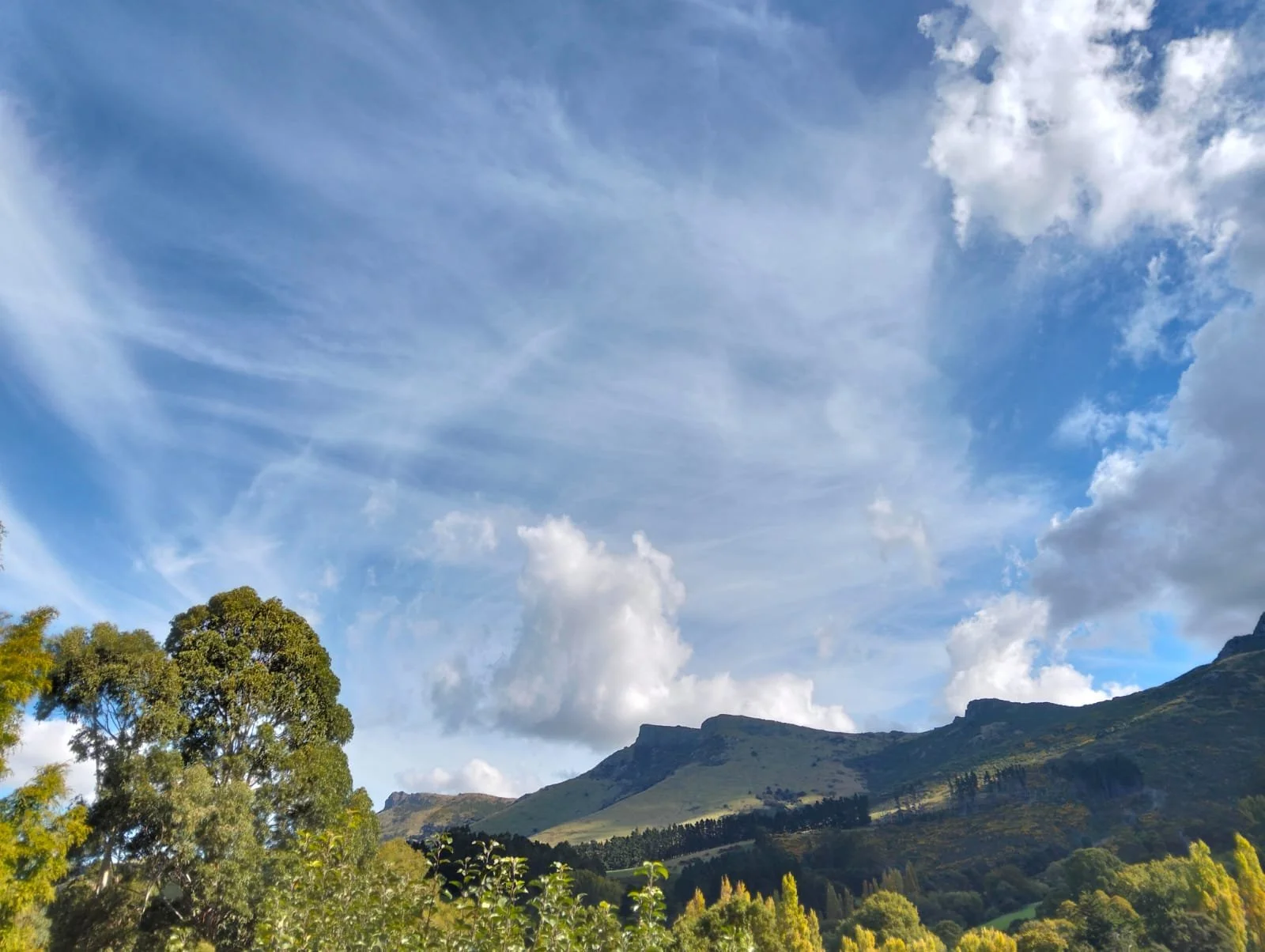
Late autumn sun is gilding the last of ‘the seven sleepers’, the southernmost rocky outcrops of the Western Port Hills.
A gate clanks. Birds whistle.
I look out onto the valley from Starling Cottage, the little studio where I meet clients, write poetry, wait on the Spirit, move, and heal. Such beauty and aliveness. My stomach trembles.
We need to guard against under-valuing the material expressions of spiritual things. It is easy to make a form of our very rejection of forms… It is bold and colossal claim that we put forward - that the whole of life is sacramental, that there are innumerable ‘means of grace’ by which God is revealed and communicated - though nature and though human fellowships and through a thousand things that may become the ‘outward and visible sign’ of an ‘inward and spiritual grace.’ (2)
Dark outside now.
I feel so grateful for this one life, for the choice to work a little less.
To have my Sundays for Quaker Meeting or just nothing.
Or rolling around, lazily, with the family.
To have garden in which to potter, cut blackberry.
To give up on this “bloated” pursuit of knowledge (again). To receive the Life at hand.
References
(1) Gerard K. Hibbert, Quaker fundamentals (1941), p.7.
(2) A Barratt Brown, Wayside sacraments (1932), pp.9-10.
Top image: Autumn valley, Ōhinetahi (photograph by me).
Bottom image: Stanbrook Benedictines, Pentecost edition, cover image - The White Horse, Kilburn, photograph by Andy Colbourne.