A Month in the Country
1.
In addition to attending my local Quaker Meeting, I continue to occasionally visit the Anglo-Catholic church I was so drawn to at Lent.
I enjoy being anonymous in the very back row, knowing no one (virtually), having no responsibilities. There are so many details to take in in this church - ‘stoups’ of holy water beside the entrance door, a side chapel to Mary where candles are lit. The priests are another part of the pageantry, in my mind, rather than standing above us as special holy figures (thank God).
I enjoy an hour of bathing in the ‘Light Without’, soaking in beauty and material presence. I enjoy it when the Vicar flicks water on my shirt and when the holy smoke begins to rise.
This isn’t, although it may sound strange, incommensurate with Quaker values:
To Fox and the early Friends, the whole of life seemed sacramental… (1)
The Spirit is poured out on all flesh - and especially, in terms of the spirit of Jesus, poured onto and into the lowest. In continuity with the historical Jesus, we are more likely to meet Christ in the bathroom or the kitchen or the children’s room than in the sanctuary or vestry of a church building.
The tensions become more noticeable...
The spirit of the church is rather stiff. The Mass trains us to be passive inasmuch as it trains us to be contemplative, but there’s no sense in which contemplative life - waiting on the spirit - might erupt into (contextually-appropriate) dynamic life. The priests hardly smile. The altar servers stand waxen still, their hands eternally clasped in prayer. The children run around and make noises - thank God, there is life, spontaneity!
Two people are baptized in an old stone font. It is beautiful and very moving. One of the priests, holding a candle, remains emotionless the entire time. The baby is blessed with water and wriggles her feet. A young woman is tearful as the sign of the cross is traced on her forehead with oil. The priest assistant, holding the candle, remains frozen in place.
At the end of the baptisms, I want to clap and cheer. I stop myself. I feel anxious - no one else is doing this. I am anxious about “getting it wrong”. Perhaps everyone else feels this too, so we don’t do anything. We repress and internalize whatever it is we feel, however the Spirit is actually moving us. The priestly entourage returns to the sanctuary. On the Vicar’s command, we clap.
Now the Lord is the Spirit, and where the Spirit of the Lord is, there is freedom. (2 Corinthians 3.17).
It is Pentecost. The vicar preaches on the Holy Spirit - who else! It’s a great sermon:
There is no corner of experience that is beyond the Spirit’s reach.
“When the Spirit of God descends upon a person and overshadows them with the fullness of his [sic] outpouring, then their soul overflows with a joy not to be described, for the Holy Spirit turns to joy whatever he [sic] touches.” (St Seraphim of Sarov).
“Acquire inward peace, and thousands around you will find their salvation.” (St Seraphim of Sarov).
The whole purpose of the Christian life, as Seraphim said, is the acquisition of the Holy Spirit — and everything else, our worship, our sacraments, our service, our prayer, is simply a means to that one glorious, transforming end.
2.
That night I have a dream. I am sitting in the Anglo-Catholic church, in the back rows as usual, wearing a bright apple-green jersey. I am barefoot, with feet resting in wet, lovely mud. I am going to be ‘dismissed’ by the vicar: a short ceremony discharging me of my duties, or, rather, declining the service I have been offering to the church. I stand up and go to leave. On the way out, I pick up some lush tufts of green grass that are growing in a gap between pews and take them with me as I leave.
3.
We can’t have again what once seemed forever.
(J.L. Carr, A Month in the Country).
4.
On Anglican Down Under, a blog of the Anglican Bishop of Christchurch, Peter Carrell, I argue that full inclusion of gay and queer people is an urgent issue of discrimination and justice that the church must take action on. Peter pushes back:
Hi Mark. The Anglican church can only take a lead on such matters when it is more rather than less united on that lead. It is not at all clear to me that it is so united.
I respond:
What sort of “unity” is needed before a church or group acts on questions of truth and justice? Is that how Jesus conducted himself? Not at all! He didn’t wait for the Sanhedrin to come around to the idea of the kingdom (of heaven). When the mob wanted to stone the woman, he didn’t say: let's take a vote. Let’s see where the unity of the Body is up to. Let’s set up another listening group. No he acted because an issue of ethical and spiritual truth and righteousness was at stake, and he acted to defend those who are “least”, who have been most excluded from the love and acceptance of God.
Peter:
Jesus made certain determinations, as do individual Christians (some of whom may be bishops/vicars); but his followers also made determinations, and did so in collective ways of making determinations (notably in the Jerusalem council, Acts 15), as church councils and synods have done ever since. A bishop for a diocese, a vicar for a parish is whistling in the wind if they make a determination that needs support from the whole people of God and that support is not given (at least not in a significant majority).
5.
In his classic study, The Prophetic Imagination (2004), Walter Brueggemann writes:
In both his teaching and his very presence, Jesus of Nazareth presented the ultimate criticism of “royal consciousness.” He has, in fact, dismantled the dominant culture and nullified its claims. The way of his ultimate criticism is his decisive solidarity with marginal people and the accompanying vulnerability required by that solidarity. The only solidarity worth affirming is solidarity characterized by the same helplessness they know and experience. (2)
Whither the prophetic tradition within Anglican worship, formation, and church leadership?
6.
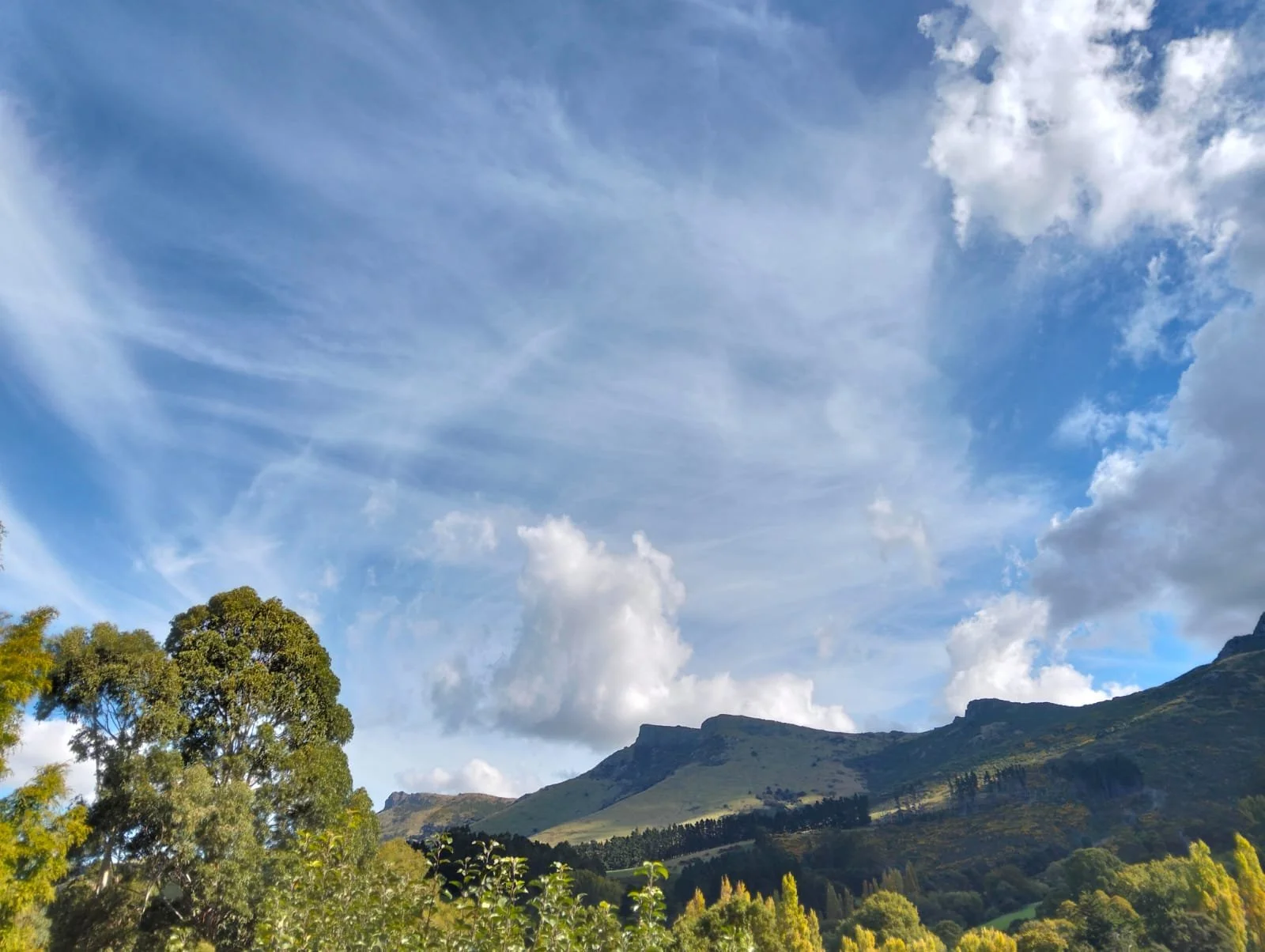
Late autumn sun is gilding the last of ‘the seven sleepers’, the southernmost rocky outcrops of the Western Port Hills.
A gate clanks. Birds whistle.
I look out onto the valley from Starling Cottage, the little studio where I meet clients, write poetry, wait on the Spirit, move, and heal. Such beauty and aliveness. My stomach trembles.
We need to guard against under-valuing the material expressions of spiritual things. It is easy to make a form of our very rejection of forms… It is bold and colossal claim that we put forward - that the whole of life is sacramental, that there are innumerable ‘means of grace’ by which God is revealed and communicated - though nature and though human fellowships and through a thousand things that may become the ‘outward and visible sign’ of an ‘inward and spiritual grace.’ (3)
Dark outside now.
I feel so grateful for this One Life, for the choice to work a little less.
7.
Out in the country, away from the city and centralized religion, I’m left with the problem of The Book - and what arises from this in terms of being Quaker.
I miss hearing the Bible, the Lectionary, publicly read. I also miss singing and music (when the tunes are good), the material beauty of church (a lot), sacraments (for sure), and the rhythm of the seasons and liturgical year. Do I miss the people? I get lots of lovely community at Quakers. I suppose I might miss the intimacy of sharing sacraments, sharing ritual worship, with others - yes. And in terms of one church we left, where things didn’t work out: I really miss some specific people there.
Meeting for Worship, being part of an anarchic, self-governing Quaker Meeting, is both liberating and refreshing, and quite intensive and demanding. I quite like just turning up to a “programmed” service, once in a while, where it’s all taken care of for me! Perhaps this awareness is the seed of a more charitable way of understanding and tolerating traditional church.
I can read the Bible at home. But it’s not the same as reading it - or hearing it read (both) - as part of collective worship, in a sacramental way.
Christian sacraments are not simply ‘visible signs of an invisible grace’ (Augustine). It’s not just that they represent and cultivate a holistic approach to life, both spiritual and material. They are that and more.
Sacraments do certain things in terms of worship and the church. They focus attention: “the divine presence is focused so as to communicate itself to us with a directness and intensity like that of the incarnation itself…”. (4) They embody the life and mystery - the story - of Jesus Christ and his ministry of reconciliation. They connect past, present, and future. They are intended to minister to the whole of the life-span, every stage of the human life-cycle. And they are public, collective events, binding us together as one body:
When we spoke of baptism, we noted that since it is often given to the individual, the action of the whole Church in terms of this sacrament tends to get obscured, and we had to plead for the recognition of its communal character by asking that the community of faith be made aware of its responsibility toward the baptized person, perhaps, when possible, by having the baptism in the presence of the whole community… The eucharistic paradigm [of a ‘common cup’ etc.] clearly shows that sacramental action takes place within the community, the body of Christ, and the fellowship of the Spirit, and that in sacramental life as common life (convivium) each is supported by all the others with whom they are united in the body. (5)
We live in a sacramental universe - yes. There are ‘innumerable means of grace’ - for sure. And specific sacraments help train us for that broader reality, and help us focus and be together as the mystery - and family - of Christ.
The Bible also safeguards a certain check on Christian authority and power, or, in Brueggemann’s words, it keeps alive the prophetic imagination:
Yet just because the Bible contains the word of God in its written form, it also retains its independence over against the community. For the church has never wholly taken the word into possession and has never exhaustively interpreted the word. We have to reckon with what Karl Barth calls “the Bible not yet interpreted, which remains free in face of all interpretation.” This is the power of the Bible to yield from its exhaustive depth new truths - truths which may place the community under judgment and summon it to the renewal of its life. (6)
8.
Early Quakers were soaked in the Bible. They were among the first generations who had access to it in English and in print. George Fox is said to have memorized almost all of the ‘authorized’ (King James) version. But they also knew that the Bible could be used as a cudgel - to limit and control the spontaneity and life of the Spirit, to kill both the spirit and the body.
Karl Barth, out of a different tradition, was concerned with this potential and reality, too. In our world today, we again see how a supposedly ‘Christian culture’ can use the Bible and Christian faith in diabolical ways.
9.
I’ve been thinking about place. That “God works purposefully within specific physical contexts rather than in a detached, placeless void.” (7)
We are beset with an epidemic of rootlessness/loss of ground. Globalization, Maurice Glasman argues, wants to eradicate a sense of place - community, boundaries, local power, choice, and sovereignty. (8) To this I would add: embodiment.
If I’m going to accept my need for traditional Christian liturgy and church alongside Quaker Meeting, I need to find a way of rethinking liturgy and church. To identify them less with centralized “global” actors and powers - creeds, bishops, priests, synods, etc.
Perhaps I just need to attend my local church, in the valley, once in a while. A tiny country church with no one our age and random visiting clergy.
I go for a walk with the dog and write a poem:
The Cross
The dog is peeing under tree lucerne
while a kererū flaps above us.
We walk around St Cuthbert’s churchyard
making peace again with the cross.
Great clouds can now be seen
on the harbour’s other side,
dazzling white and tubular.
Actually, the poem comes before these thoughts about place.
There is something transformative and settling in the very act of visiting St Cuthbert’s: walking past its yews and gravestones, nodding to the stone building with its low red roof, remembering the last time I was here, reading out loud…
I will seek the lost, and I will bring back the strayed, and I will bind up the injured, and I will strengthen the weak, but the fat and the strong I will destroy. I will feed them with justice. (Ezekiel 34: 16)
Remembering the conversations about the oak outside, and how everyone’s pear and apple harvests were going.
And then walking up into the light, the “new” cemetery at the back, unshaded by trees, seeing where Rose and Ruaraigh are buried.
Seeing a bottle of unopened Speight’s beside another man’s grave.
Gazing at the oak and the church and the clouds.
References
(1) Gerard K. Hibbert, Quaker fundamentals (1941), p.7.
(2) Brueggemann, The Prophetic Imagination (2004), cited in Taylor (above).
(3) A Barratt Brown, Wayside sacraments (1932), pp.9-10.
(4) John Macquarrie, Principles of Christian Theology (revised edition, 1977), p.449.
(5) Macquarrie, above, pp. 473-474.
(6) Macquarrie, above, p.457.
(7) Ruth Anne Irvin, “Redeeming Home: A Christian Theology of Place in a Placeless World”, Southern Equip.
(8) See Maurice Glasman, Blue Labour (2024).
Top image: Autumn valley, Ōhinetahi (photograph by me).