Facing east at Lent
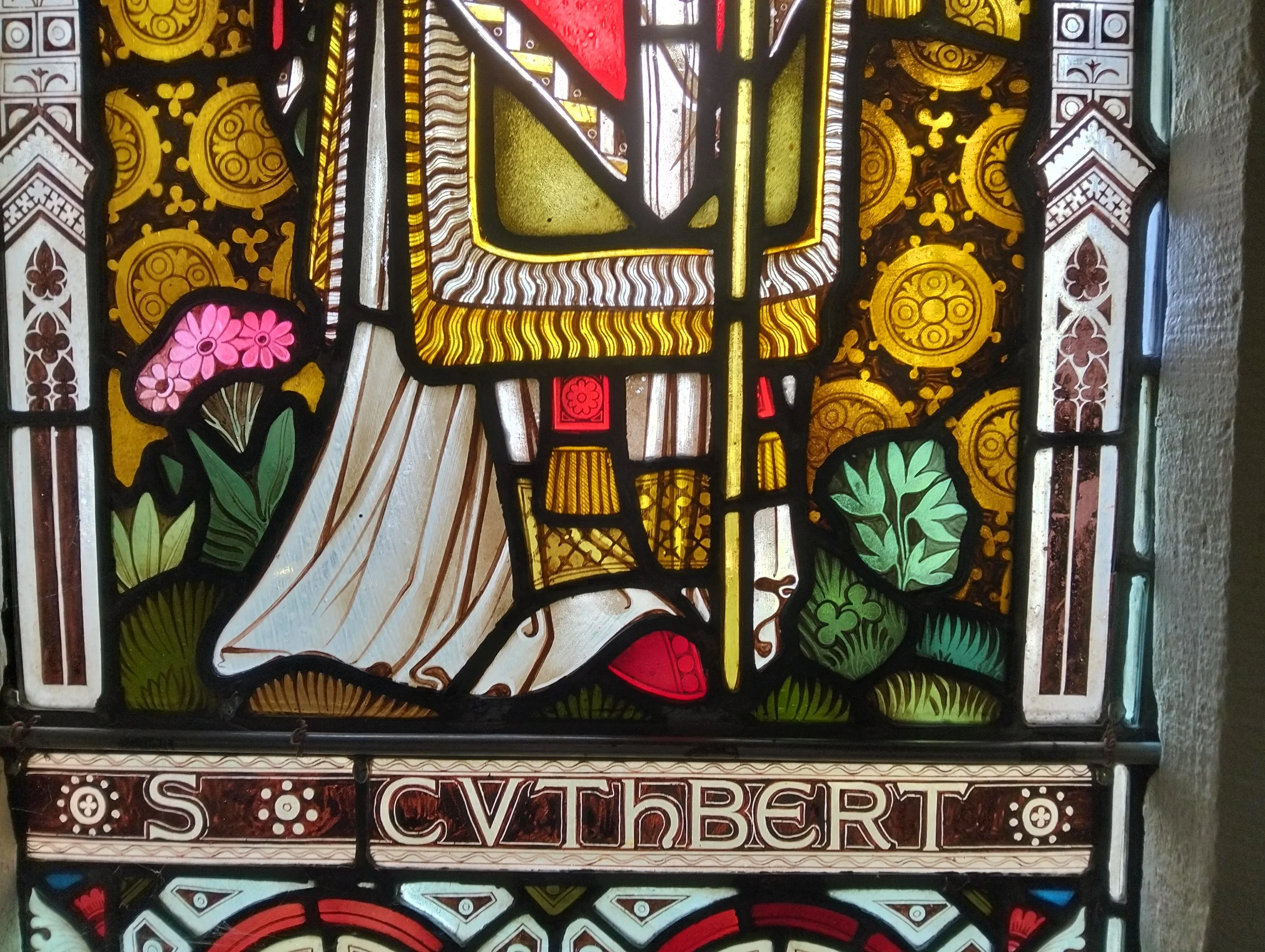
In my 49th year of church attendance - minus some gaps in my 20s (ok, for most of my 20s), and some more recent gaps as I became a member of the Society of Friends - I may have finally worked out how to sit in a (traditional) church.
One sits on a seat, facing forward.
Ok, I knew that, though not with full awareness. An added piece is this: the minister should sit - perhaps, at least some of the time - this way, too.
This is technically known as ad orientem, meaning ‘to the East’. That is, Christian churches have traditionally been built in an east-to-west direction. Thus, the congregation facing forward to the altar (or ‘communion table’, if you prefer) is ad orientem / facing east.
Though [such] orientation is derived historically from a pagan habit of praying towards the sunrise, Christians have seen in its adoption symbolic reference to Christ as the Rising Sun. (1)
And, biblically:
For as the lightning comes from the east and flashes as far as the west, so will be the coming of the Son of Man. (Matthew 24:27).
Traditionally, the altar would have been placed tight against the east wall. The minister had no other option than ad orientem, effectively with his back to the congregation. Positively, this has been seen as (1) the minister leading the people in a pilgrimage towards God, and (2) as the direction of Christian prayer and worship, i.e. we pray not to each other (usually) but to God.
These days, it has become common for Roman Catholic services to be held versus populum, where the priest faces ‘towards the people’ (Orthodox churches, on the other hand, still arrange their liturgies with everyone facing east). This is to emphasize and more fully include the congregation, the people of God, in the service (‘liturgy’ means ‘work’ or ‘service for the people’). Protestants practice this orientation as it is more suited to a liturgy centred on preaching.
The point of this post isn’t to argue ad orientem versus versus populum. Rather, I would like to simply explain how I came to this awareness: that one sits in a traditional church facing forward, facing east, and that the minister, perhaps, should sit this way too (at least, some of the time).
My story centres around a key. And what a key!

This Lent, I have been attracted back to traditional church - to following Jesus and the Jesus narrative through a resonance of scripture, symbol, and sacrament (as opposed to just practising silent Quaker worship - which I still do, need to do, and love).
I have attended several traditional services (Anglican, Roman Catholic, Methodist), yet almost all of them left me sad and disappointed (for reasons, internal and external). Reading the “Daily Services” from A New Zealand Prayer Book has sustained me throughout this search, and continues to do so. One day, I suddenly thought: why don’t I ask for the key to my local (small, beautiful) country church? I could go down there on a Wednesday (my day off) and say Morning Prayer.
I asked, and the answer, generously, was yes.
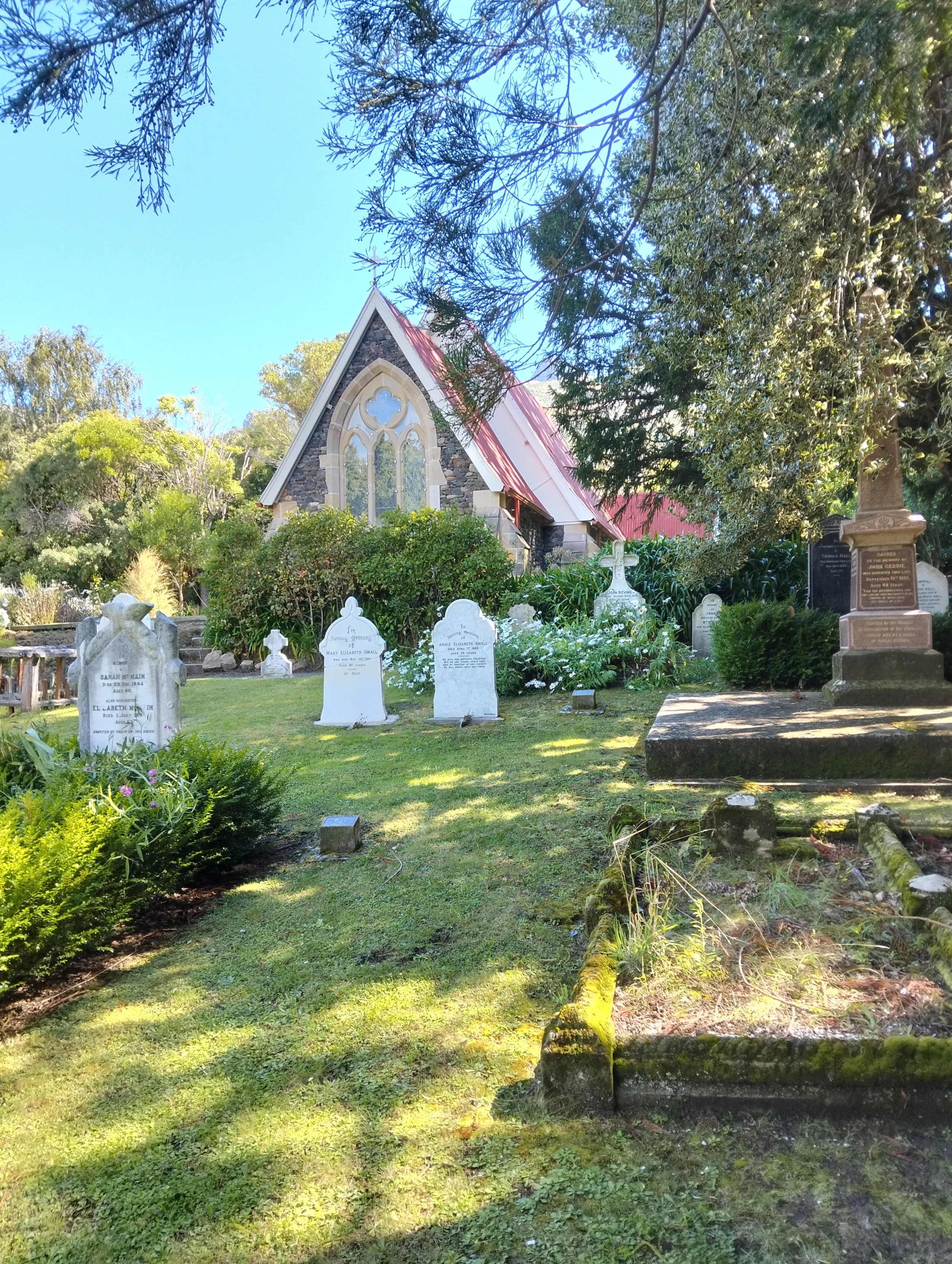
Wednesday 3 March, St Cuthbert’s, Governor’s Bay. 10 am, Morning Prayer. My first task was to work out where to sit, how to sit.
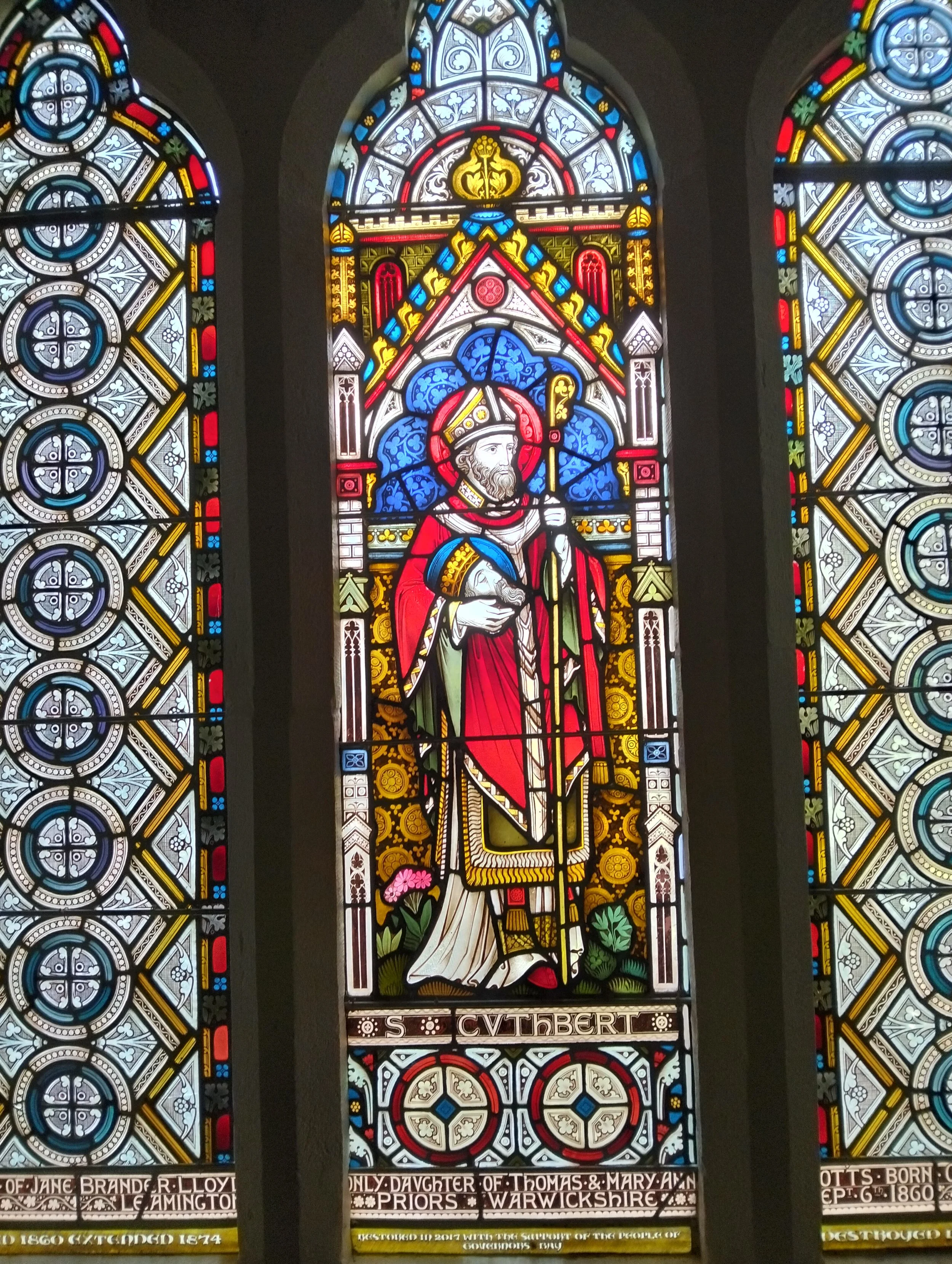
I was immediately drawn to the stained glass window at the head of the church (restored after most of the church’s walls were destroyed in the 2010 earthquakes), where the narrow nave channels our attention.
I experimented with orientation, then worked out that the best way was facing forward/east after all, just outside the sanctuary, with a view to Saint Cuthbert and the luminous, jewel-like glass.
For the last fifteen years or so, I have had a horror of sitting in churches in the usual facing the front/‘tram tracks’ style. It makes me feel like I’m in a school assembly. That’s one of the attractions of the Quaker circle for me: God with us, between us, within us.
But there is also something very powerful about approaching/beholding/adoring God in front of us, above, and beyond us.
Another way of thinking about this is in terms of the Roman Catholic idea of The Four-fold Presence of Christ:
When the bishops met for the Second Vatican Council, one of the key principles they put forth regarding the liturgy is that Christ is present in the liturgy in four unique ways. These ways are:
in the Eucharist broken and shared;
in the person of the minister;
in the Word of God [proclaimed] ; and
in the assembled people of God (2)
To this helpful list, I would like to add: (5) within, without, and all around (see John 1:1-5; Colossians 1:15-20) and (6) especially in the very least (see Matthew 25:40).
For me, worshipping ‘in the round’ most powerfully connects us with the presence of Christ in ‘the assembled people of God’, or the presence of Christ within and between us when ‘two or three are gathered in my name’. The Quaker reason for worshipping in a circle (or square) is so everyone can see each other’s faces.
Facing forward, we may miss this God-among-us (‘Emmanuel’) presence. At worst, we end up walled off from each other. But at best, we orient toward God “in the Eucharist, broken and shared”, “in the word” and Gospel proclaimed, and in Christ as the celestial horizon and Omega of our world and lives.
When Christ who is our life appears, then we also will appear with him in glory. (Colossians 3: 4).
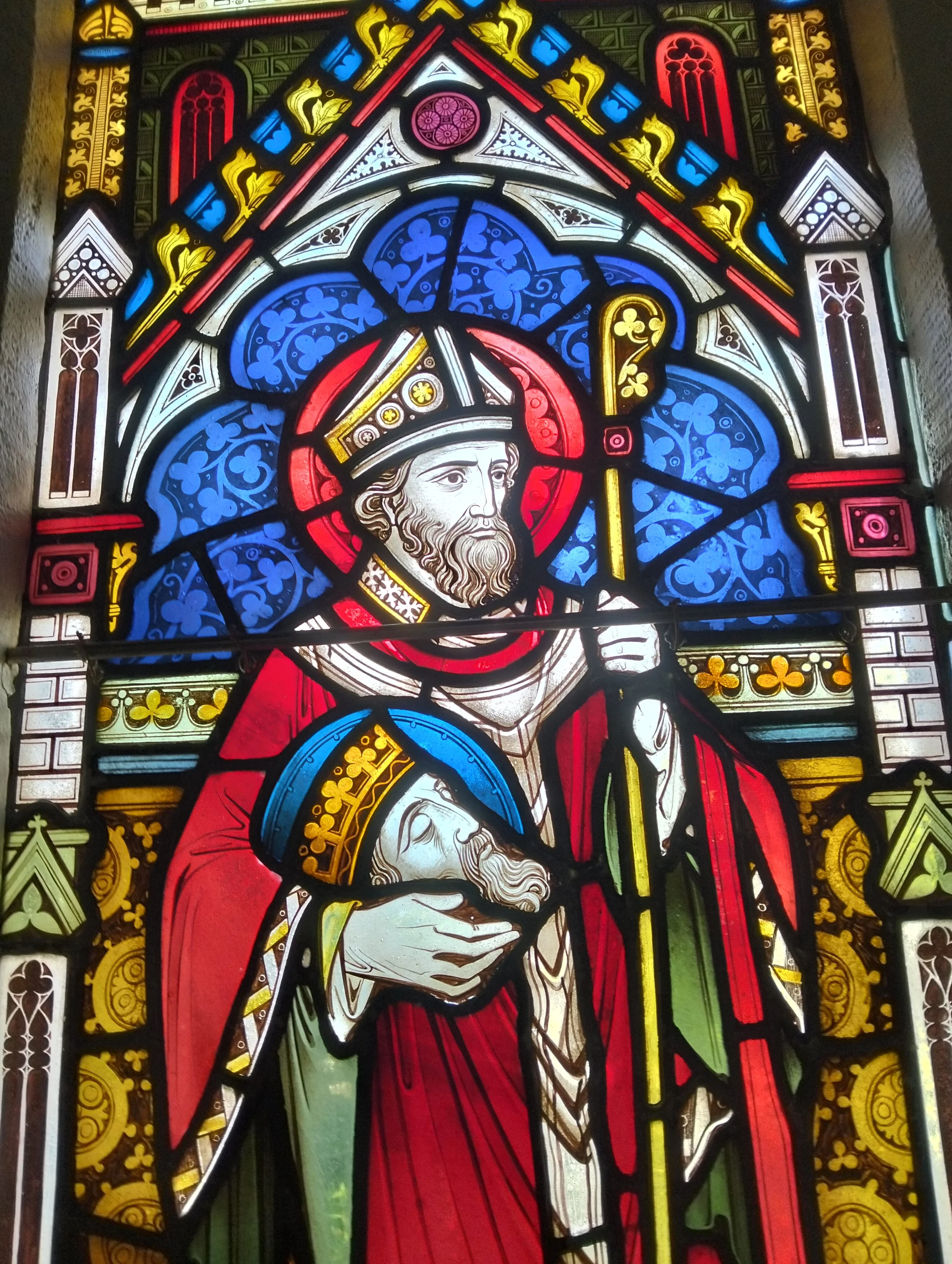
…such as symbolized by the resplendent St Cuthbert’s of Governor’s Bay (pictured, as is traditional, holding the crowned, severed head of St Oswald)!
At Morning Prayer today, it also occurred to me that it would be better for the minister to sit with the people too, facing forward/facing east (as I witnessed recently at a Methodist service - the minister sat with the people, gazing forward, until it was time for her to preach).
For the first time in my life, and notwithstanding my great fondness for worship ‘in the round’, I find myself admiring and quoting Joseph Ratzinger/Pope Benedict VVI!
Christians look toward the east, the rising sun. This is not a case of Christians worshipping the sun but of the cosmos speaking of Christ. (3)
In Aotearoa, for Māori, east is especially significant. It is the direction from which the waka arrived from Hawaiki homelands. For many iwi, east symbolizes origins.
Within the Christian mythos, Ratzinger is concerned for the opposite symbolism - not origins, but destiny, eschatological horizon:
Praying toward the east means going to meet the coming Christ. The liturgy, turned toward the east, effects entry, so to speak, into the procession of history toward the future, the New Heaven and the New Earth, which we encounter in Christ. It is a prayer of hope, the prayer of the pilgrim as he walks in the direction shown us by the life, Passion, and Resurrection of Christ. (3)
Ratzinger labelled such widespread and normative use of versus populum as “an unprecedented clericalization”, and I see his point:
Now the priest—the “presider,” as they now prefer to call him—becomes the real point of reference for the whole liturgy. Everything depends on him. We have to see him, to respond to him, to be involved in what he is doing. His creativity sustains the whole thing…. Less and less is God in the picture. More and more important is what is done by the human beings who meet here and do not want to subject themselves to a “pre-determined pattern.” The turning of the priest toward the people has turned the community into a self-enclosed circle. In its outward form, it no longer opens out on what lies ahead and above, but is closed in on itself. (3)
This is a fair critique of certain tendencies in Quaker worship, too - or the potential for all human systems and liturgies to become insular, self-referential, and closed off from the Presence.
I find myself loving two, contrasting ‘orientations to God’: the circle (God with us), and gazing towards the transcendent Mystery (God beyond, calling us forward, disrupting our sense of control). What is a poor Quaker Catholic to do, but spin!
Perhaps the beautiful, ‘middle way’ can help me hold and reconcile this ‘tension of opposites’…
In Anglican Christianity, many orientations are permitted - ‘in the round’ (such as my old church of St Luke’s in the City), ad orientum (rarely, in some Anglo-Catholic parishes), and the more usual ‘towards the people’ (with all the congregants, or pilgrims, facing east towards the Cosmic Christ). Within certain liturgical and doctrinal limits, ministers and local churches are free to experiment and decide for themselves. Perhaps this says something about Anglicanism’s capacity to tolerate diversity and uncertainty, and its willingness to value freedom. The pilgrim is free to find their own ‘orientation to God’ within a (nevertheless) common ‘direction of travel’.
Love will not be constrain’d by mastery…
Love is a thing as any spirit free.
(Geoffrey Chaucer, The Canterbury Tales)
Anglican churches offer us another compelling reason to gaze east. Whereas the apex of a Roman Catholic church is often a crucifix - Christ on a cross - in front of an (commonly enclosed) end-wall; and whereas in Protestant churches we often face east into an unadorned plainness, Anglican churches often bring us icons of light:
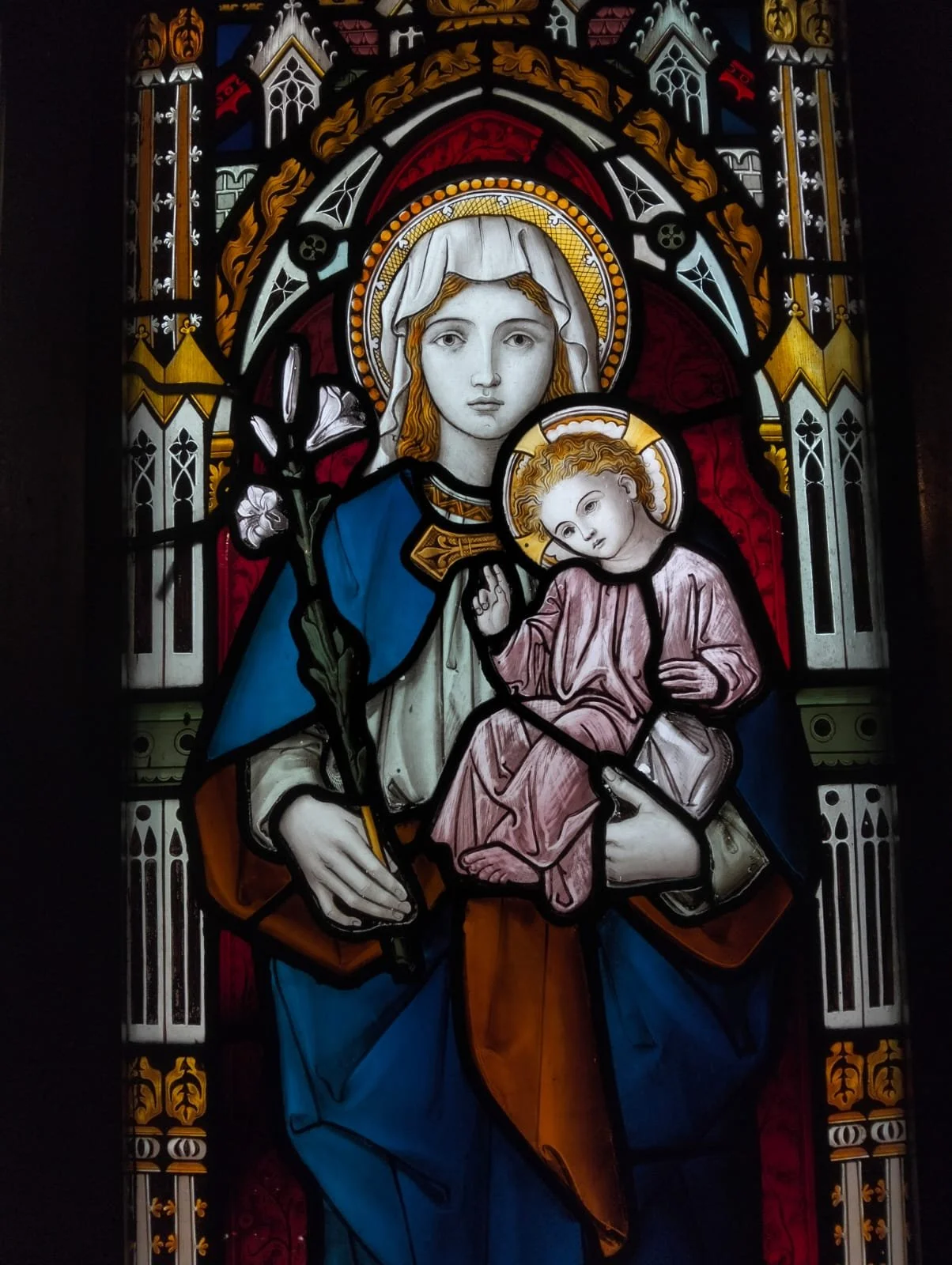
St Mary’s, Addington, eastern window detail
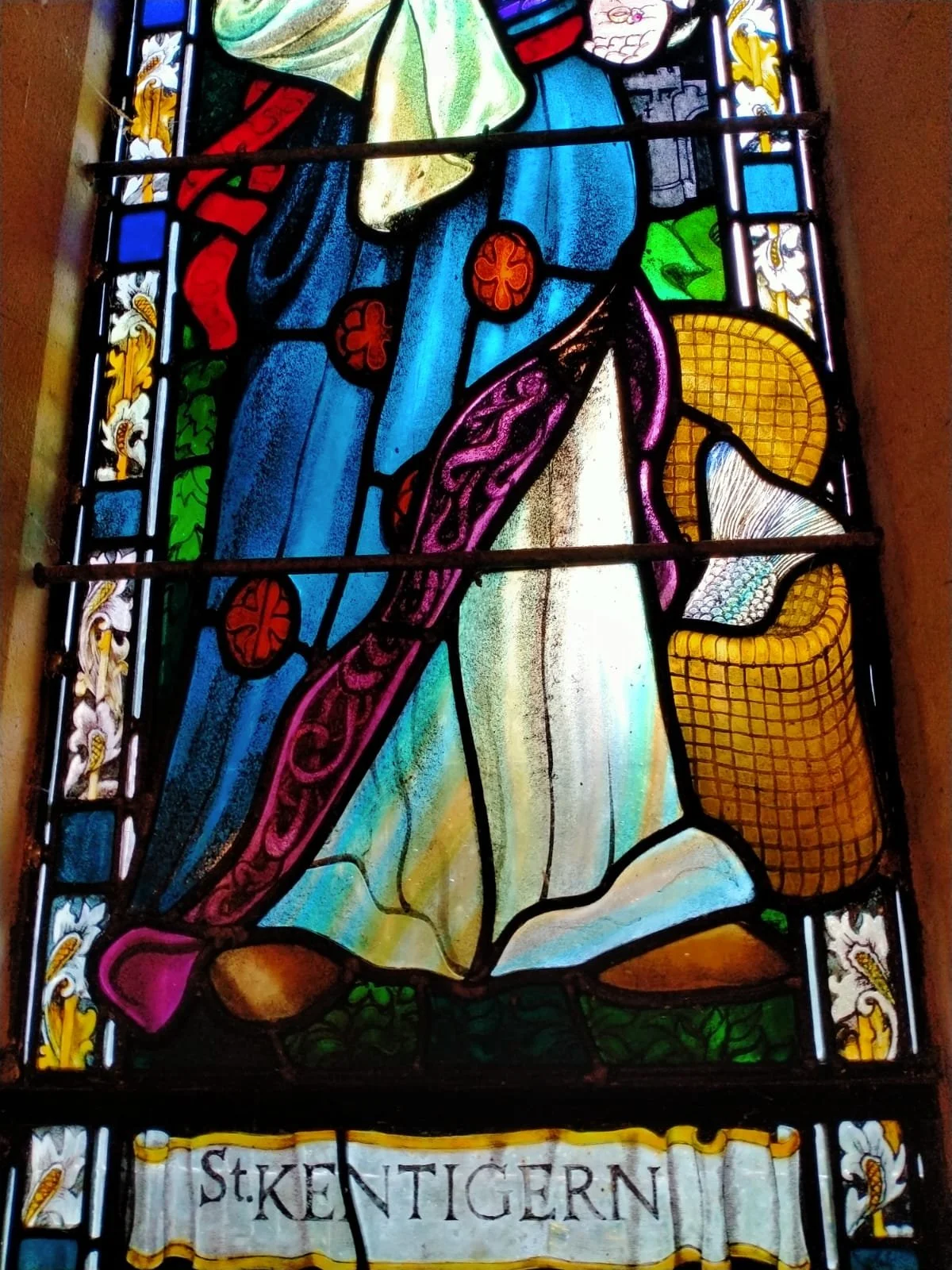
St Kentigern’s, Kaituna, eastern window detail
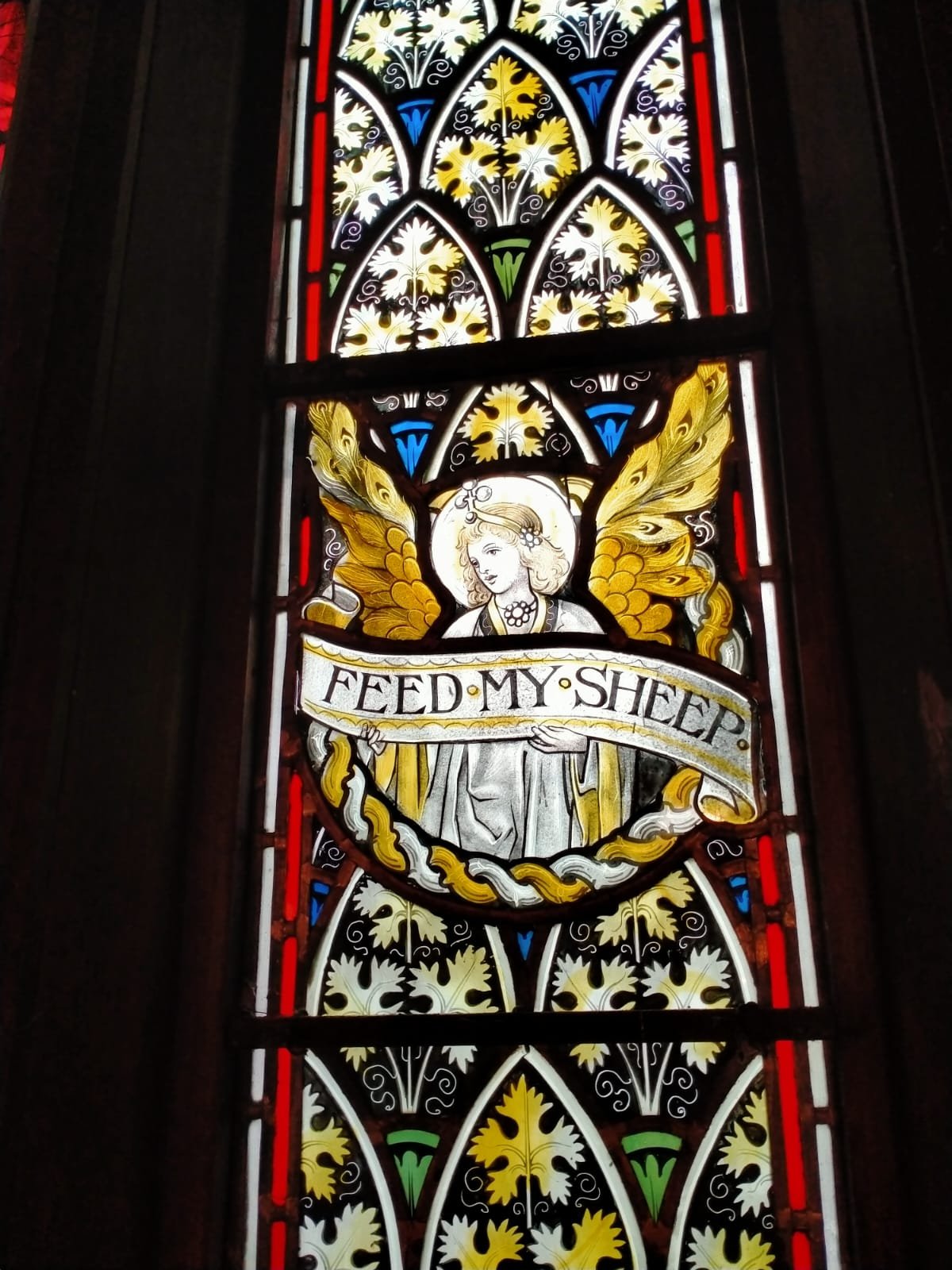
St Peter’s, Teddington, eastern window detail
References
(1) F.L. Cross and E.A. Livingstone (eds.), The Oxford Dictionary of the Christian Church, second edition (1974), p.1008.
(2) Office of Worship, Archdiocese of Santa Fe, “The Four-fold Presence of Christ”, retrieved from: https://archdiosf.org/documents/2017/11/04TheFour-foldPresence.pdf
(3) Joseph Ratzinger, The Spirit of the Liturgy (1999), quoted at: https://crisismagazine.com/opinion/turning-toward-the-lord-with-benedict-xvi